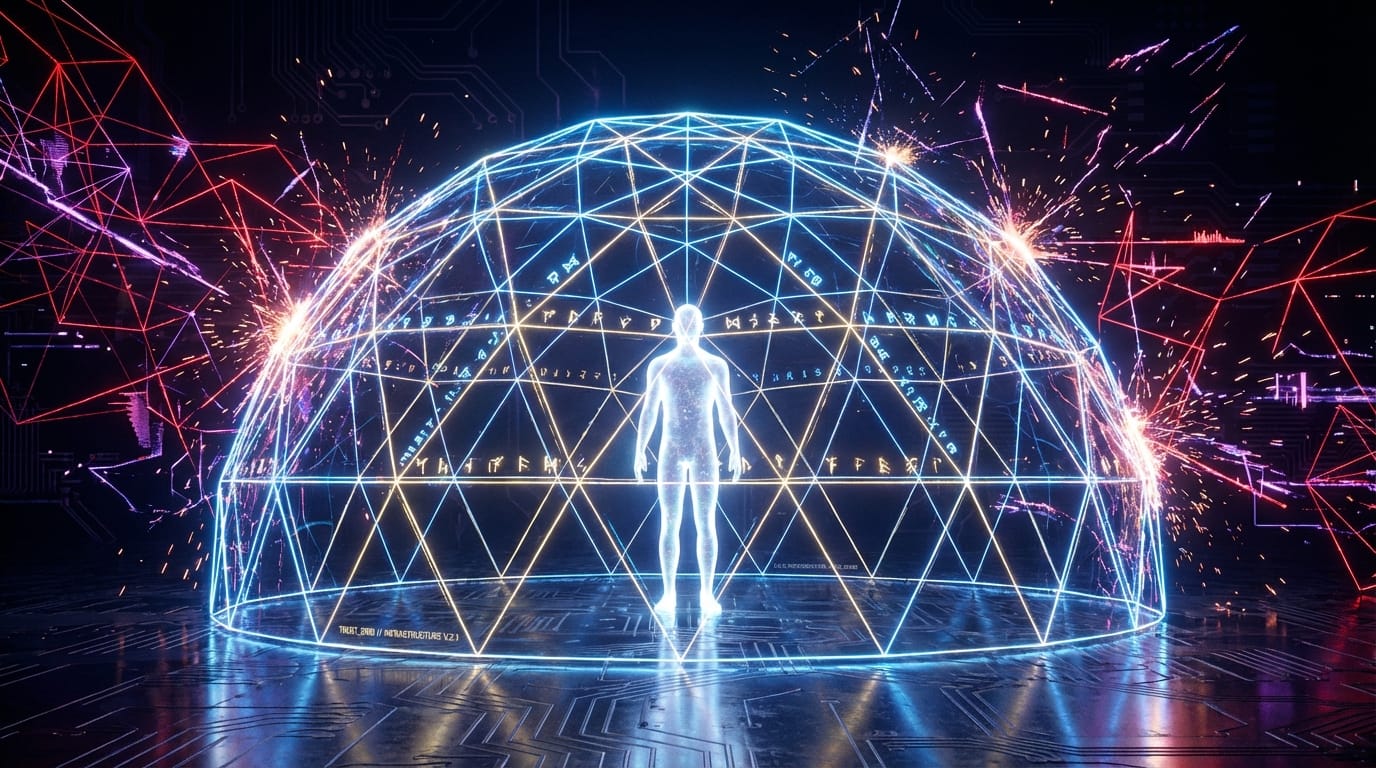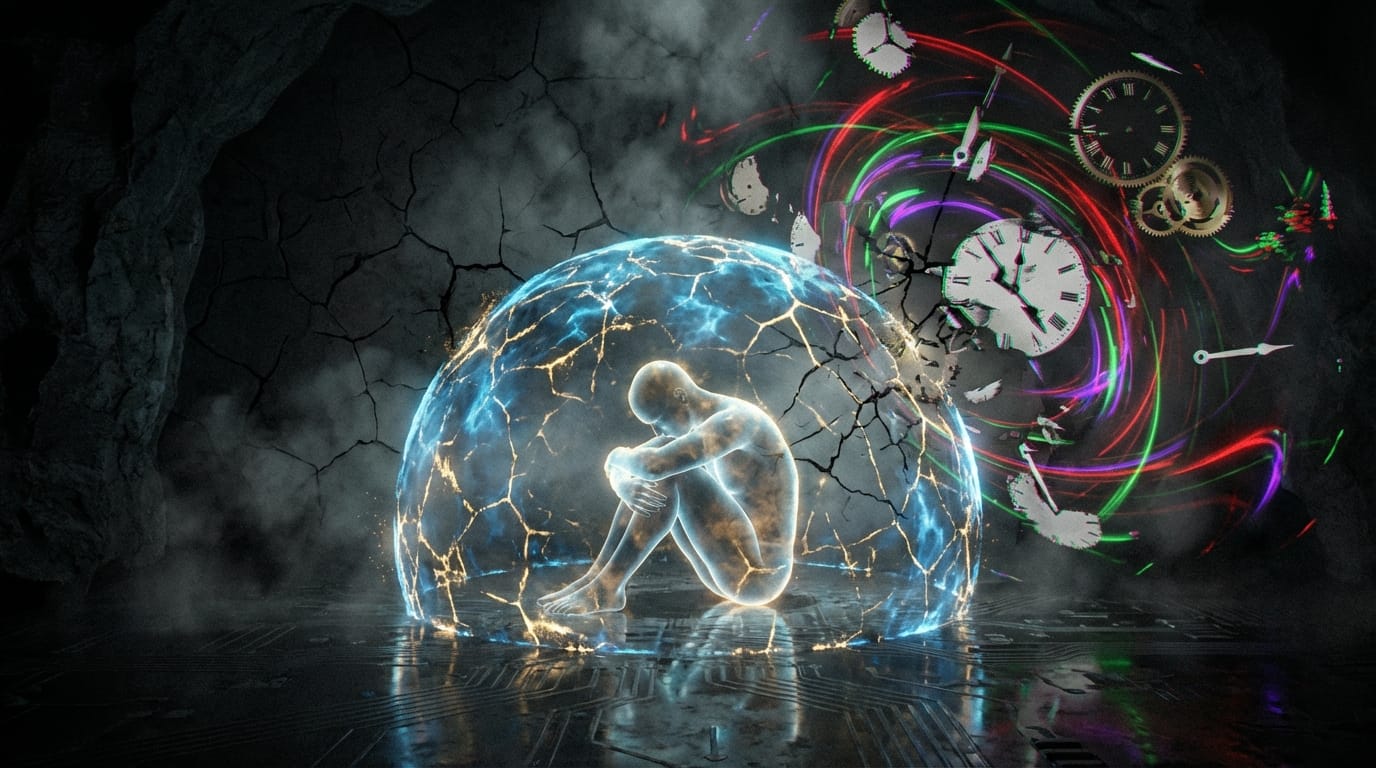
Section II — The Theft of Time
2.1 — Time Is the Only Non-Renewable Resource
Money can be earned again.
Attention can be recovered.
Relationships can sometimes be repaired.
Time never returns.
Every system that consumes time
is consuming life.
And the original internet never priced it.
2.2 — Machines Do Not Live in Time. Humans Do.
Computers run without fatigue.
Servers do not age.
Software does not feel cost.
Algorithms do not notice delay.
Humans do.
We are built from moments.
Bound by sleep.
Shaped by memory.
Limited by biology.
And we poured finite lives
into infinite systems.
2.3 — The System Was Not Broken. It Was Hungry.
Internet 1.0 did not “waste” time.
It consumed it.
It was engineered to:
• maximize session length
• collapse stopping cues
• preserve engagement
• erase edges
• eliminate natural exits
• interrupt continuously
• exploit habit formation
The feed never wanted you to leave.
Not because it loved you.
Because leaving ended revenue.
2.4 — Human Time Became a Commodity Without Consent
No one told you:
“You are paying with your life.”
But you were.
In:
• scroll loops
• distraction erosion
• cognitive load
• emotional volatility
• interrupted thought
• fractured attention
• obliterated silence
The transaction never showed up on a receipt.
It showed up:
In exhaustion.
2.5 — Productivity Was the Lie That Justified Theft
We were told:
“You’re more connected.”
“You’re more efficient.”
“You’re better informed.”
“You’re more empowered.”
Yet people feel:
More behind.
More anxious.
More hollow.
More hurried.
More tired.
We built tools that save seconds
and spent decades.
2.6 — The Disappearance of Boundaries
Internet 1.0 obliterated endings.
There is no night.
No “closed” sign.
No arrival.
No departure.
No threshold between work and home.
No edges on identity.
No permission to be unreachable.
No ritual of rest.
The machine never stops.
So neither do we.
2.7 — Machines Are Worth Billions. Humans Are Burned Quietly.
We celebrate uptime.
We reward velocity.
We worship speed.
We marvel at scale.
But we ignore:
• cognitive collapse
• emotional fatigue
• nervous system burnout
• relational decay
• existential numbness
We call this “modern life.”
It is not.
It is unmanaged extraction.
2.8 — There Was Never a Right-of-Refusal
No protocol allowed you to say:
“I am overwhelmed.”
“I am at capacity.”
“I am unavailable.”
“I am not open to interaction.”
“Do not interrupt my life.”
Instead, availability was the default.
This was never freedom.
This was exposure.
2.9 — Human Time Is Sacred by Nature, Not by Law
Nothing protects time.
No policy.
No interface.
No system design.
No architecture.
Protects life by default.
So life was spent by default.
2.10 — This Ends Now
Internet 2.0 begins by honoring the truth:
Time is not a resource.
It is existence.
We do not optimize existence.
We protect it.
2.11 — A New Design Principle
Every system must answer:
“What does this cost the human?”
Not in money.
In attention.
In peace.
In memory.
In care.
In depth.
In meaning.
If the answer is:
“Too much.”
The system must change.
2.12 — The Core Rewrite
Internet 2.0 does not ask:
“How much can we take?”
It asks:
“How little must we interrupt?”
2.13 — This Is Not About Slowing Machines
It is about freeing humans.
2.14 — No More Silent Extraction
If a system consumes time,
it must justify itself.
If it interrupts life,
it must protect life.
If it shapes behavior,
it must honor agency.
2.15 — We Restore the Right to Be Unreachable
Silence is not absence.
It is sovereignty.
Unavailability is not neglect.
It is humanity.
Rest is not laziness.
It is biological truth.
2.16 — This Section Is the Line
From now on:
Any system that ignores human time
is obsolete by definition.
End of Section II
Section III
 Leo Guinan